


About Kilmacolm
Kilmacolm enjoys attractive rural surroundings coupled with easy access to the picturesque Firth of Clyde; at the same time it is located only 20 miles west of Glasgow City Centre and 11 miles from Glasgow International Airport. The village population is about 4000 (2001 Census) and, within the wider Kilmacolm Parish to which the activities of the Civic Trust extend, the overall population is nearer 6500, including Quarrier's Village and the surrounding rural areas.
The history of Kilmacolm is described separately in this website. The development of the village in its current form largely commenced in Victorian times with the erection of the fine villas in extensive grounds for which the community is still noted.
Kilmacolm offers a range of local shops, restaurants and cafes, churches of various denominations and schools in both the state and private sectors, the latter, St Columba's, is a non-denominational independent day school for pupils aged 3 to 18.
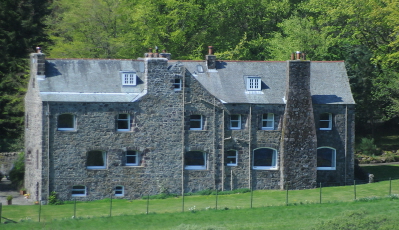
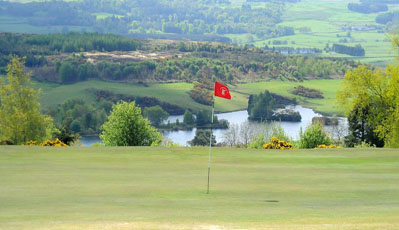
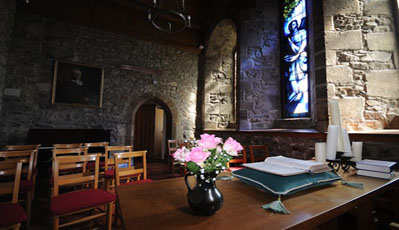
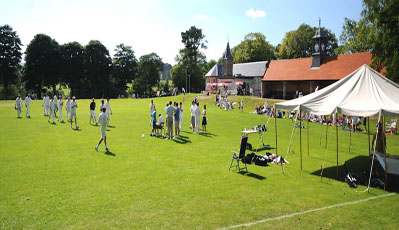
Quarrier's Village has an interesting background; it was established in the late 19th century by philanthropist William Quarrier as the location for a children's home in a grouping of traditional Victorian cottages intended to offer a family setting for its occupants. At its height, the self-contained community had over 40 children's cottages, Mount Zion Church, a school, fire station, workshops, farms etc. Changes in childcare practice during the 1970/80's led to a significant reduction in the numbers in care with Quarrier's and the organisation diversified to provide a wide range of care services. Many of its cottages are now occupied as private residential dwellings.
Conservation Area status has been accorded to a large part of Quarrier's Village and also the Rowantreehill area of Kilmacolm lying east of Bridge of Weir Road, comprising a group of substantial homes in spacious grounds, including Charles Rennie Mackintosh's renowned "Windyhill". A new Conservation Area is being formed around Kilmacolm Cross.
Kilmacolm lies close to the Clyde-Muirshiel Regional Park with its variety of wildlife habitats and activities. On the north-east side of the village the Forestry Commission has bought Knockmountain Farm. This has been planted and is being run on their behalf by the Scottish Woodland Trust. There is a Ranger employed to encourage access and promote the aims of the site.
History
The village and earlier parish of Kilmacolm have a long and eventful history. A number of histories about the village have been published: click here for a short bibliography.
History of Kilmacolm: a Bibliography
In 2007 the Kilmacolm Civic Trust sponsored the publication of "Kilmacolm a History" by David Roe, published by Birlinn (ISBN 978-1841586212).
Copies of the book are available from local outlets ( e.g. Amazon stocked ) and from the Trust.
Click here for the introduction to this book to give an introductory background.
Kilmacolm: A History: Introduction
Additional reading material by Julia Lawrence -